
Choosing secure locks for rentals means matching the lock to the door, the tenancy and the legal duty, not buying the most expensive cylinder. Most rental doors are uPVC or composite with a euro cylinder, and that cylinder is the weak point and the cheapest thing to upgrade.
Last Updated: November 8, 2026
Quick Summary
- An anti-snap euro cylinder is the single most cost-effective security upgrade for a rental door.
- Look for a cylinder rated to TS 007, which tests against snapping, bumping, picking and drilling.
- A cylinder that protrudes from the door gives a thief something to grip, so it should sit flush.
- A deadbolt suits timber doors as a second, independent lock; mortice locks suit older timber doors.
- Smart locks need four checks: door compatibility, battery life, data security and a physical key backup.
Table of Contents
- How to Choose Secure Locks for Rentals Without Overpaying
- Best Locks for Rental Property: Quick Comparison Table
- 1. Anti-Snap Euro Cylinders: The Baseline for Every Rental Door
- 2. Deadbolts and Mortice Locks: When Each One Fits
- 3. Multipoint and Five-Point Locking Systems for Flat Entrance Doors
- 4. Smart Locks for Rental Properties: What Landlords Must Check
- 5. Changing Locks Between Tenants: Legal Steps and Key Management
- 6. Keyless Entry for Holiday Lets: Access, Fire Safety and Lockouts
- Frequently Asked Questions
How to Choose Secure Locks for Rentals Without Overpaying
Choosing secure locks for rentals means matching the lock to the door, the tenancy and the legal duty, not simply buying the most expensive cylinder on the shelf. Landlords often pay for hardware that does not fit the door they have, and the same mistake shows up again and again.
Most rental doors are standard uPVC or composite with a euro cylinder. That cylinder is the weak point, and it is also the cheapest thing to upgrade. Get it right and you have covered the majority of forced-entry risk for a modest outlay.
Below, we break down seven lock types and the mistakes landlords make with each, so you can spend where it counts.
Locksmiths and security hardware guidance from the Master Locksmiths Association
Best Locks for Rental Property: Quick Comparison Table
The best lock for a rental property is the one that meets the security standard, suits the door and survives tenant turnover. This table summarises the seven options we cover, so you can scan before reading the detail.
| Lock type | Best for | Key strength | Main watch-out |
|---|---|---|---|
| Anti-snap euro cylinder | Most uPVC and composite doors | Resists snapping and bumping | Must match door thickness |
| Deadbolt | Timber doors, back doors | Independent secondary lock | Needs correct backset |
| Mortice lock | Older timber doors | Strong, traditional | Costly to fit |
| Multipoint lock | Flat entrance doors | Locks at several points | Full unit replacement |
| Five-point lock | High-security flats | Maximum points of contact | Higher cost |
| Smart lock | Holiday lets, managed portfolios | Remote access codes | Battery and data risk |
| Keyless entry | Short-term lets | No keys to lose | Fire escape compliance |
For a deeper comparison of mechanical and smart options against security standards, our guide to the best door locks for home security sets out the trade-offs in more detail.
1. Anti-Snap Euro Cylinders: The Baseline for Every Rental Door
An anti-snap euro cylinder is the single most cost-effective security upgrade for a rental door.
The mistake landlords make is buying on price alone. Look for a cylinder with a recognised security rating, such as the TS 007 standard, which tests cylinders against snapping, bumping, picking and drilling (Why Choose a Smart Lock with BSI Kitemark™ Certification?).
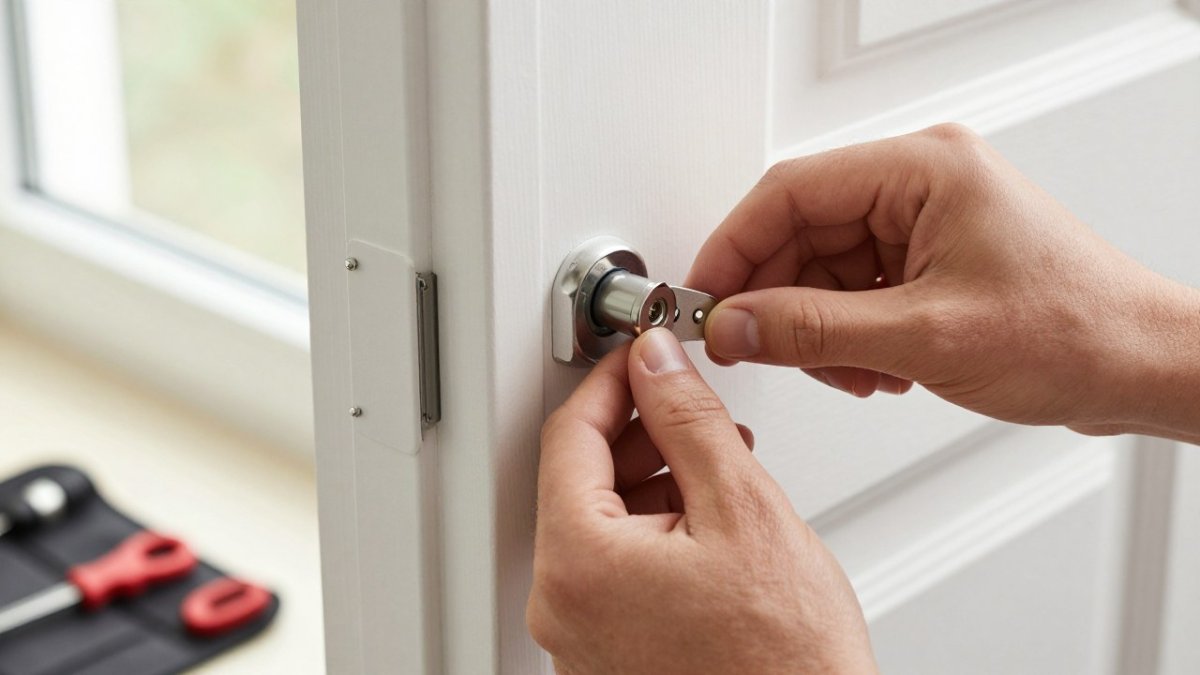
Fit matters as much as the rating. A cylinder that protrudes too far from the door gives a thief something to grip, so the cylinder should sit flush with the door.
If your flat has a uPVC entrance door, our UPVC lock service covers what can be fitted or repaired on that door type.
2. Deadbolts and Mortice Locks: When Each One Fits
A deadbolt suits timber doors where you want a second, independent lock. A mortice lock suits older timber doors where you want a strong lock set into the door itself rather than surface-mounted.
Use a deadbolt on a back door or a timber front door as a secondary lock. It gives the tenant a lock that works independently of the main handle, which matters if the primary lock fails.
Mortice locks are heavier and generally more secure, but they can be more involved to fit and to replace. On a period property with original timber doors, a mortice lock is often the right call.
Best for: timber doors and period properties. Skip if: your door is uPVC or composite, where a cylinder upgrade is the better spend.
3. Multipoint and Five-Point Locking Systems for Flat Entrance Doors
A multipoint lock secures a door at several points along its edge with a single turn of the key. A five-point system does the same with five points of contact, which is common on flat entrance doors built to higher security standards.
Multipoint and five-point systems are commonly fitted to flat entrance doors. When one part fails, the whole unit may need replacing, so it is worth checking the mechanism as well as the cylinder before buying.
A new cylinder fitted to a multipoint lock with a worn gearbox will not fix the underlying fault.
4. Smart Locks for Rental Properties: What Landlords Must Check
Smart locks for rental properties are worth considering only after four checks: door compatibility, battery life, data security and a physical key backup. Skip any one of these and the lock becomes a liability rather than an upgrade. But before any of that, settle the question competitors tend to blur: who is actually allowed to choose, install, pay for and remove the lock?
Who decides: landlord or tenant?
In a typical assured shorthold tenancy, the landlord owns the lock and the door, so replacing a smart lock is the landlord's decision and normally the landlord's cost. A tenant who wants a smart lock should ask in writing and expect to restore the original lock at the end of the tenancy unless the landlord agrees otherwise. A tenant who fits a lock without permission risks breaching the tenancy agreement and may be asked to remove it at their own expense. The practical rule most landlords follow is: the person who owns the door owns the lock decision, and any change is recorded in the tenancy file.
The four checks in detail
Door compatibility. Many smart locks are designed for timber doors and will not fit a uPVC multipoint door without an adapter or a full replacement.
Battery life and fallback. Every smart lock needs a way in when the battery dies or the app fails. A keypad code or a physical key override is not optional on a rental.
Data security and privacy. A smart lock that stores access logs and guest codes holds personal data, and as a landlord you are responsible for it under data protection law.
The tenancy and consent. Put the smart lock in the tenancy agreement or an inventory addendum, record the access method, and give the tenant a written explanation of the fallback.
Emergency access and lockout planning
Build a fallback into the system before you need it: a spare code held by the landlord or agent, a physical key in a secure key safe, or a local contact who can attend. For emergency services, confirm the lock can be opened from inside without a key where the door is an escape route. A smart lock that deadlocks from the inside can trap a tenant in a fire, which is a far bigger risk than a lockout.
Check UK door compatibility and current availability for any smart lock model before committing, and only fit one where the door suits it and a mechanical override is in place.
5. Changing Locks Between Tenants: Legal Steps and Key Management
Changing locks between tenants is good practice, and in most tenancies it is the landlord's responsibility to ensure the property is secure at the start of a tenancy. The practical steps are straightforward, but the legal side needs care.
Start by checking the tenancy agreement and any deposit scheme rules. Then follow a clear sequence:
- Confirm who holds keys and how many were issued
- Give the required notice before attending, unless it is an emergency
- Fit a new cylinder or rekey the existing lock
- Issue new keys and record how many the tenant receives
- Update your key register and note the change
Rekeying is often cheaper than full replacement and achieves the same result: the old tenant's key no longer works. Keep a record of every key cut, because a missing key is a security risk you cannot trace later.
For landlords managing this at scale, our professional lock change services for landlords cover the legal duties, tenant disputes and BS 3621 and TS 007 compliance in one place.
6. Keyless Entry for Holiday Lets: Access, Fire Safety and Lockouts
Keyless entry for holiday lets can remove the need to hand keys to guests in person. It also introduces two risks that owners routinely miss: fire escape and lockouts.
The fire risk is the serious one. A thumb-turn on the inside of an escape door must allow a guest to open the door without a key in an emergency.
The lockout risk is the everyday one. Guests forget codes, batteries die at the worst moment, and a 2am call is expensive.
If you are weighing whether to bring in a specialist, our guide to hiring a holiday rental locksmith covers what to ask, what it costs and how to vet one. Our fire safety lock requirements for holiday lets guide sets out the thumb-turn and escape route rules in full.
Rental security fails when the lock does not match the door, the tenancy or the law. Kernow Locksmiths fits and repairs locks across rented homes, flats and holiday lets, with professionally trained locksmiths and a 24 hour emergency service for lockouts and urgent repairs.
Frequently Asked Questions
What type of lock is best for a rental property?
A British Standard TS 007 three-star anti-snap euro cylinder paired with a multipoint or five-point locking system is the safest baseline for a rental door. It resists snapping, bumping and drilling, and it keeps insurance and fire assessments straightforward. Fit a thumb-turn cylinder on the final exit door so occupants can leave without a key. For back doors, a mortice deadlock or a keyed deadbolt adds a second layer. A qualified locksmith can survey each door and advise which secure locks suit the frame and the tenancy.
Can a landlord change the locks between tenants?
Yes. A landlord can change locks between tenants, and doing so is good practice because it removes any doubt about who holds a key. Give the new tenant the keys at the start of the tenancy and record the handover. If the tenancy is still running, the landlord cannot change the locks without the tenant's agreement unless a court order or a specific clause applies. Check the tenancy agreement first, then book changing locks between tenants as part of the turnaround so the property is secure before the next move-in.
Are smart locks for rental properties a good idea?
They can be, provided you check three things: the lock meets UK insurance and fire expectations for the door, it works with the door's existing preparation, and you have a manual key or override for power or network failure. Smart locks for rental properties make guest and contractor access easier and remove the spare-key problem. Avoid models that depend only on an app, and keep a physical key with a trusted contact. Confirm battery life and data privacy terms before fitting.
Are keyless entry locks secure for holiday lets?
Keyless entry for holiday lets is secure when the lock carries a recognised rating, issues unique codes per guest, and has a key override. Change the code after every stay and disable departed guests immediately. Keep a mechanical key in a key safe for cleaners and emergency access, and check the lock still allows a quick exit in a fire. A professional fit and a written code policy matter more than the brand. Ask a qualified locksmith to confirm the lock suits your holiday-let doors.
What should a landlord do if a tenant loses a key?
Replace the affected cylinder rather than copying a new key onto the old barrel, because a lost key may still fit. Record the incident, tell the tenant what will happen, and agree who pays according to the tenancy agreement. If the lost key opens a communal or master-keyed door, rekey that system too. Keep a small number of spare keys with a named contact, never in the property. A locksmith can swap the cylinder and issue new keys the same day.


